
A glorious walk into Christian doctrines
Charles Haddon Spurgeon was an English pastor who lived between 1834 and 1892. Many theologians agree to call him the Prince of Preachers in the nineteenth century. However, the strength of his pulpit was drawn from the writings of the early English saints who lived between the seventeenth and eighteenth centuries and were known as the Puritans. One of these figures known in Burundi is John Bunyan, who wrote an important book that became the best-selling book in the world after the Bible: the Pilgrim’s Progress.
Many of the Puritans were outstanding theologians and excellent preachers of the Gospel, presenting it in a profound yet simple way that was accessible to everyone. As faithful shepherds who were deeply concerned about the church’s growth in holiness, they understood that sound doctrine is an extraordinary instrument in the process of being conformed to Christ—especially when applied within families under the guidance of church leaders. Spurgeon built upon this heritage. He therefore compiled doctrines drawn from the Westminster and Baptist Catechisms.
The use of Catechism in Burundi
For many Burundians, the word “Catechism” may sound old-fashioned and is often associated with the methods of Roman Catholic priests who taught Africans using a question-and-answer format.
Although Africans primarily learn through storytelling, it is important to remember that our intellect—like that of all human beings—also readily absorbs ideas that are well organized, concise, thoughtfully structured, and clear. Using such a doctrinal summary connects us with the saints of earlier generations and protects us from straying away from biblical truth.
In Burundi, the earliest missionary churches had written confessions of faith derived from the global traditions of their denominations. Over time, however, church practices and traditions gradually became more emphasized than these doctrinal confessions.
When new churches emerged between 1990 and 2000—often referred to as revival churches—the emphasis was placed more on evangelistic activities than on the careful formulation of doctrine. Apart from a few basic points of faith, doctrine was often found more on paper than lived out in daily life.
From 2010 until today, the rapid advancement of digital technology has made it possible for newly emerging churches to adopt doctrines and practices from external sources through broadcasts and online media, often imitating others. This has led to a multiplication of questionable teachings, making it necessary to return to the foundations of God’s Word and sound doctrine.
Within this movement, a new generation is arising—mainly composed of young students and university graduates—who are eager to examine the Scriptures, test long-held beliefs against them, set aside what does not align with biblical truth, and be built up and grow in sound doctrine. For a few, revisiting the writings of the early Puritans and different Faith Confessions and reformed catechisms has also become a growing interest.
One of these is the Puritan Catechism compiled by C-H Spurgeon. Although he was a Baptist, he never confined himself to a narrow Baptist identity; instead, he sought to root the people of his time in the broader Puritan heritage.
Here are the words Spurgeon himself used to encourage the use of this Catechism:
“I believe that the use of a good catechism in our households will be of great value in guarding against the errors of our time. For this reason, I have compiled this small book from the Westminster Assembly’s and Baptist Catechisms for use in the church I lead. Those who use it in their families or schools are encouraged to understand how to explain it in their own words; however, the wording used here should be carefully memorized, for it will become clearer as the years go by.”
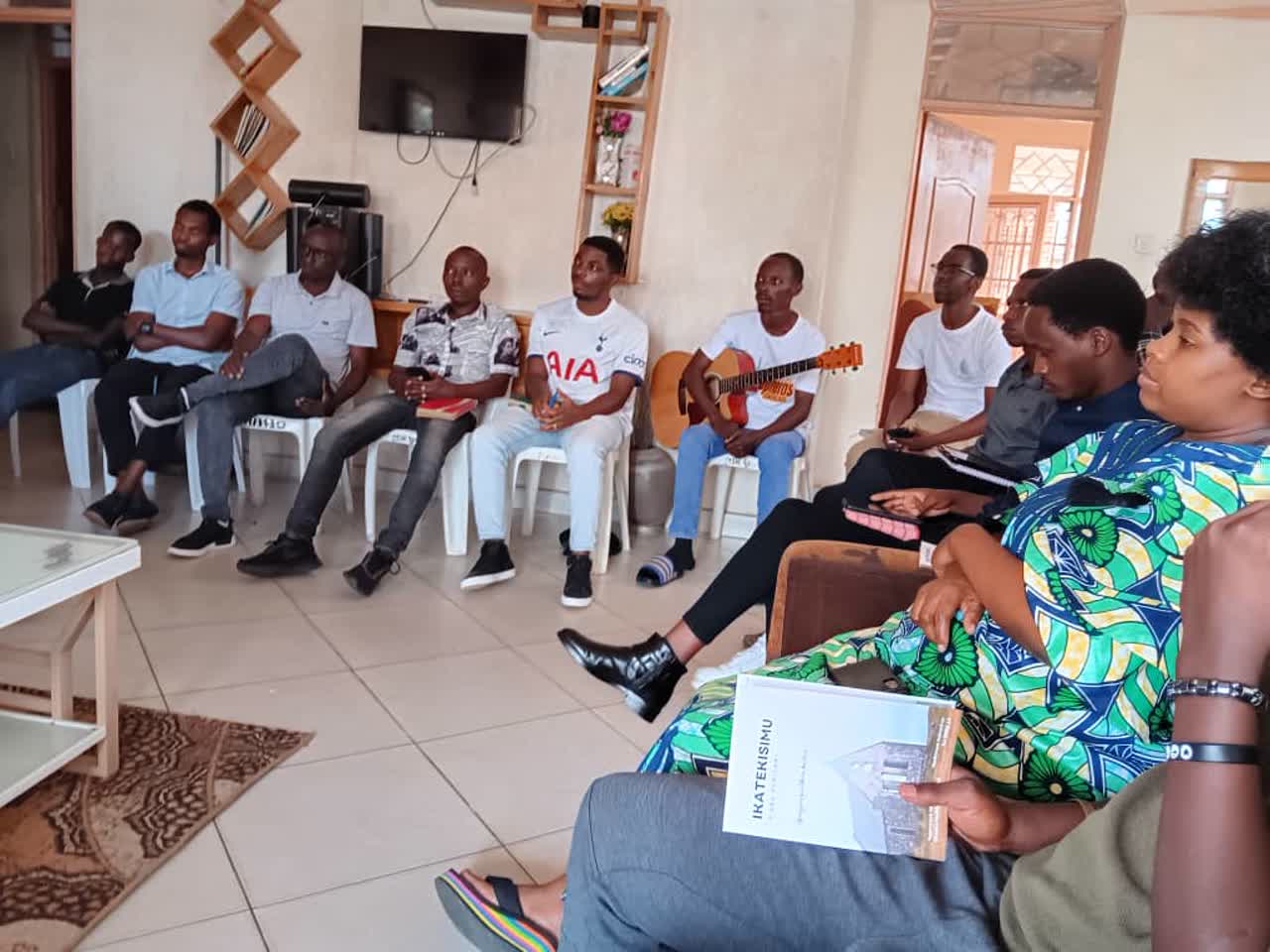
It is with humility and hope that I translated this catechism into Kirundi and presented it to the church of Burundi, trusting that after many years of use, God will lead us back to the ancient paths of the early saints. Before launching it publicly our discipleship communities called Green Cells have been using it for nine months. It was a spiritual delight to walk the journey together. We saw the beauty of Christian doctrine, tasted the joy of glorious riches of these biblical truths. Our closing retreat was a golden opportunity to encourage one another, share testimonies, and hear stories of those using it in family context and personal challenges they are encountering. What a blessing!
Little Flock Ministries