
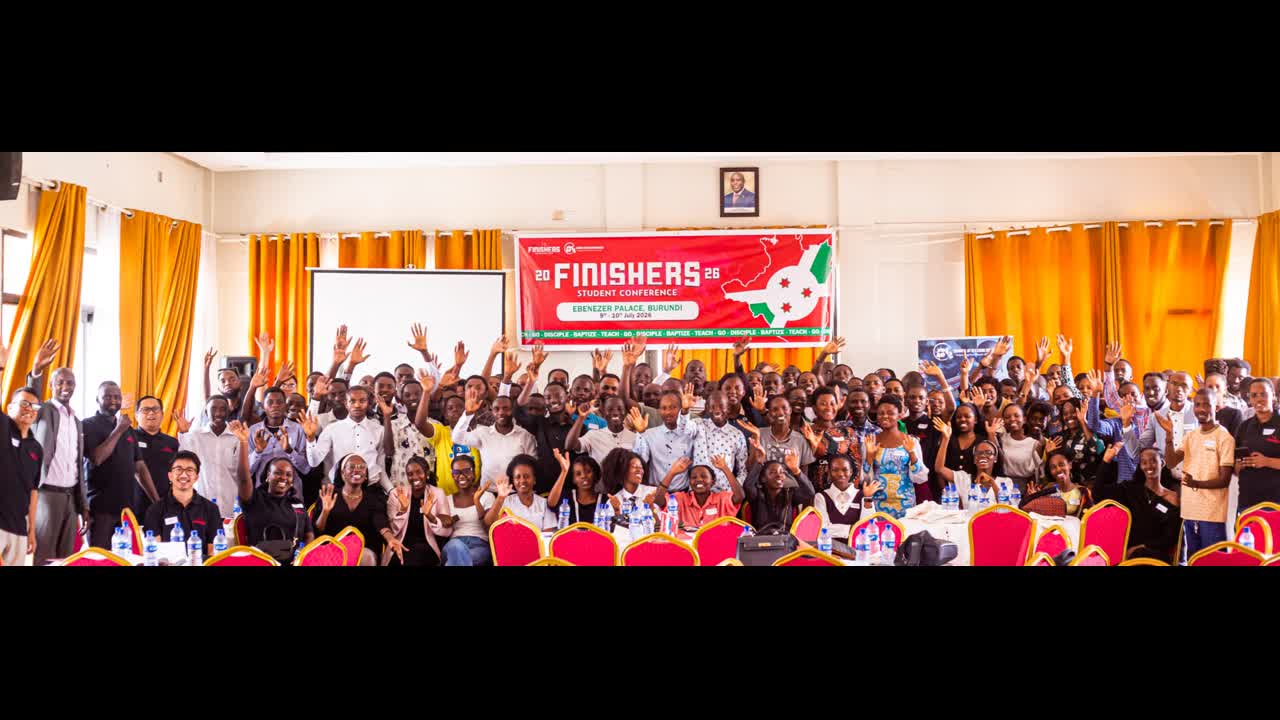
Students and missions
Being a student, especially at the university level, means passing through one of the most significant stages of life. Beyond acquiring knowledge, it is a season when a person begins to ask what they will do with that knowledge and what purpose their life will serve. It is a period when decisions about one's future calling become increasingly important.
This is precisely why different organizations, ideological movements, and even companies actively seek to reach university students. Universities are where some of the brightest and most promising young people are found. Those who demonstrate exceptional ability and leadership are often identified early and prepared to influence the worlds of business, academia, politics, and ideas.
What, then, can help university students avoid wasting their potential?


They need a compelling vision of living for God's glory. What is the point of chasing the same dreams everyone else is pursuing? History reminds us of university students who made decisions their peers never expected: they devoted themselves to seeing God glorified among the nations by taking the gospel to peoples, tribes, and countries that had never heard the Good News.
We think, for example, of:
It was in this spirit that, on the 9th and 10th, hundreds of university students gathered at Ebenezer Hotel for a missions conference organized by Finishers, a ministry that originated in Indonesia, in partnership with the missionary organization Channel of Blessing International, led by a humble yet dynamic leader, Philbert.

The conference emphasized God's redemptive mission throughout the entire Bible. From the Garden of Eden, where God came seeking fallen humanity, through His dealings with Israel, to the incarnation of Christ, and finally to the sending of the Church into the world through the power of the Holy Spirit, the missionary purpose of God can be traced like a red thread running through every page of Scripture.

Another major theme was learning about the people groups and nations that remain unreached and un-engaged with the gospel. Many of these are located in regions heavily influenced by Islam. Yet we also discovered that there are unreached people groups much closer to us. Even within our own country, there are foreign communities living among us that have never truly been reached with the gospel, and few are intentionally ministering to them.
One observation, however, was that some of the available statistics and classifications of unreached people groups seem to have limitations. This may be because the organizations compiling such data do not always work closely with local believers and workers who possess firsthand knowledge of these communities.
The conference also challenged participants to respond personally to God's call to missions. Much of the language used echoed the challenge John Piper delivered years ago to thousands of university students in his now-famous message, Don't Waste Your Life.
The final session was dedicated to praying for those who sensed that God might be calling them into missionary service. It was deeply moving to witness hearts stirred by the immense spiritual need of peoples who still have no access to the gospel, while countless souls perish every day before the first missionary has ever reached them.
The Finishers team demonstrated remarkable humility, prayerfulness, and genuine love throughout the conference. For the Church in Burundi, the zeal and sacrificial spirit displayed by these Indonesian brothers and sisters was both humbling and deeply challenging. Not many years ago, Indonesia itself was considered one of the world's major unreached mission fields because of the strong influence of Islam. Today, however, it is rapidly becoming one of the countries sending missionaries to the nations.
After many years of discussions, conferences, and debates about missions, one question continues to linger:

Could it be that God is showing us that we have concentrated much of our missionary mobilization in places that yield comparatively little harvest, when perhaps we should invest far more intentionally in university students and the younger generation?
May God, in His grace, do the same among us.
Little Flock Ministries